


Morciano di Leuca Itineraries
The territory of Morciano di Leuca offers five main itineraries for exploring the area’s historical, religious and natural heritage, ranging from the town centre to the coast and the archaeological areas.
Urban route
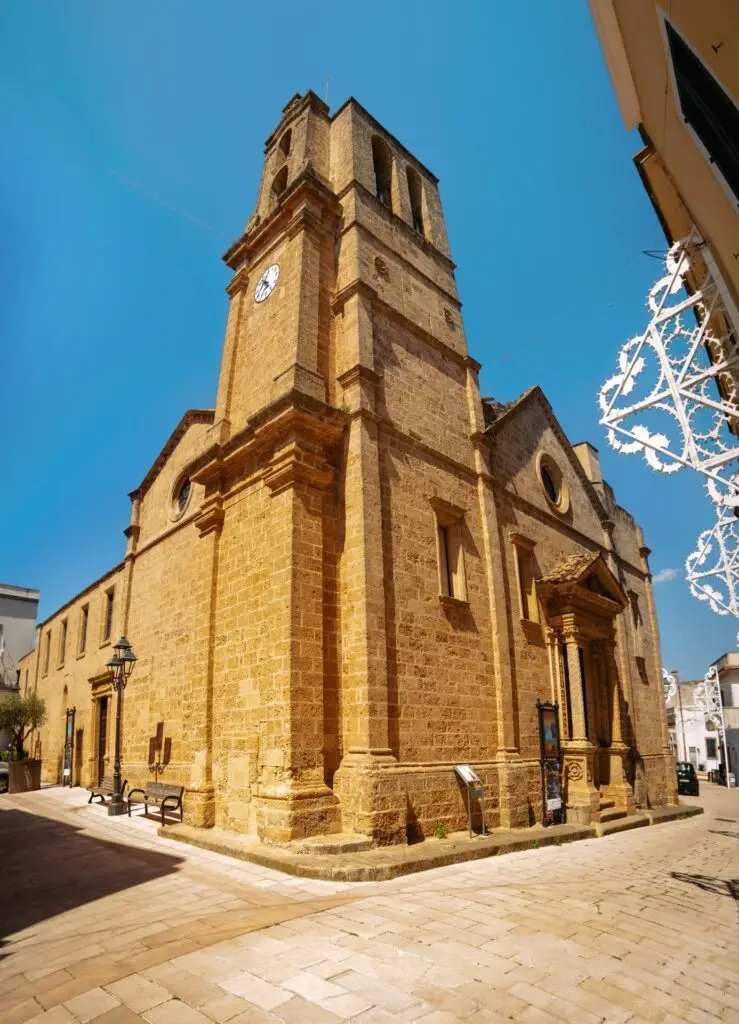
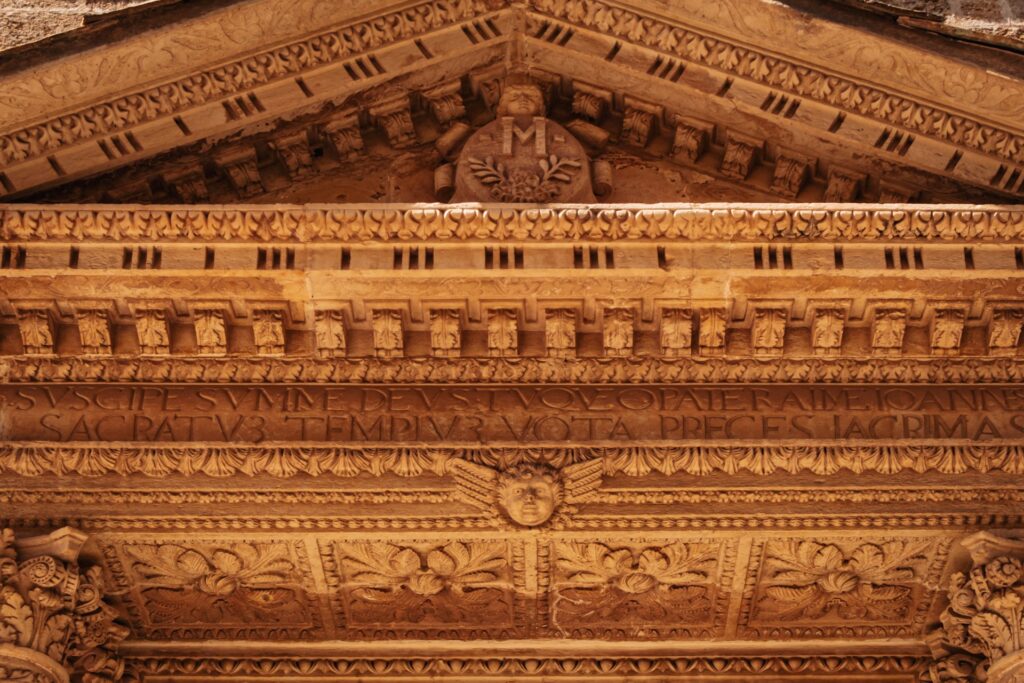
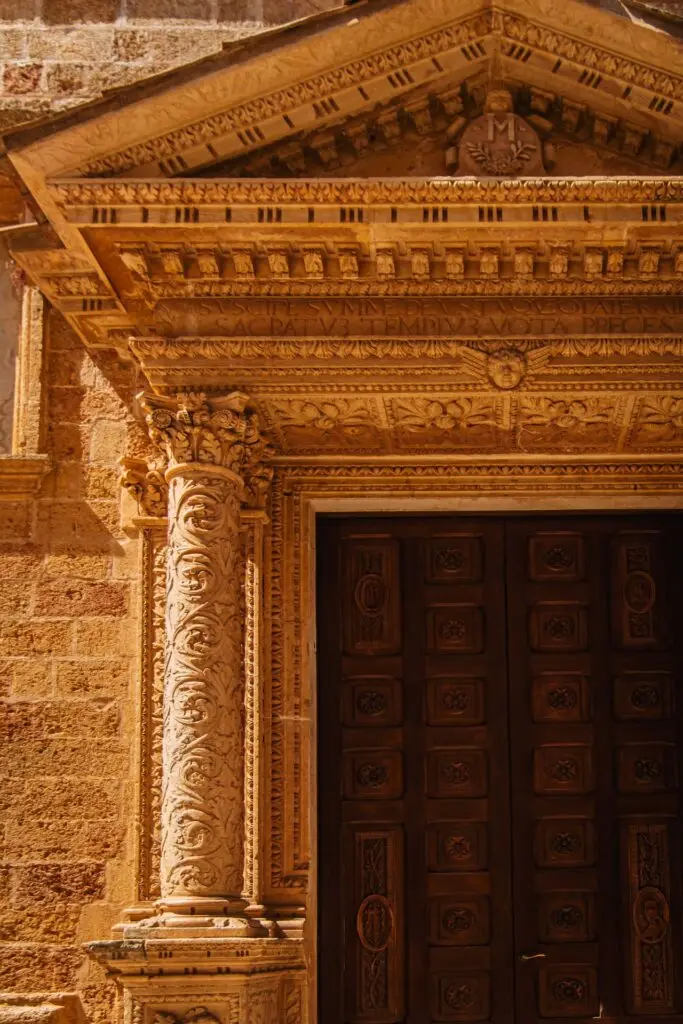
The urban route focuses on the historic and architectural core of the town.
The route winds its way from the infopoint at Palazzo Strafella, near which stands the parish church dedicated to San Giovanni Elemosiniere (a fortified 16th-century church), the town’s patron saint.
From piazza Giovanni Paolo II branch off the medieval alleys of Vico Torri, the oldest heart of the medieval part of the town, which take in:
- Casa Monteduro;
- the Chapel of the Madonna di Costantinopoli (second half of the 16th century), which holds inside, set against the wall, an interesting frescoed monolith depicting the Virgin and Child;
- the imposing Medieval Castle;
- the Church of the Madonna del Carmine;
- a 17th-century underground olive press, which preserves its working spaces and some of the original fittings in good condition.
From vico San Giovanni you continue towards the chapel of the Natività, a place of worship extra moenia with an interesting Baroque façade. Inside, above the altar depicting a Virgin and Child, an inscription records the year of construction: 1670. From the cemetery you return to the starting point along via Pace.
Torre Vado route
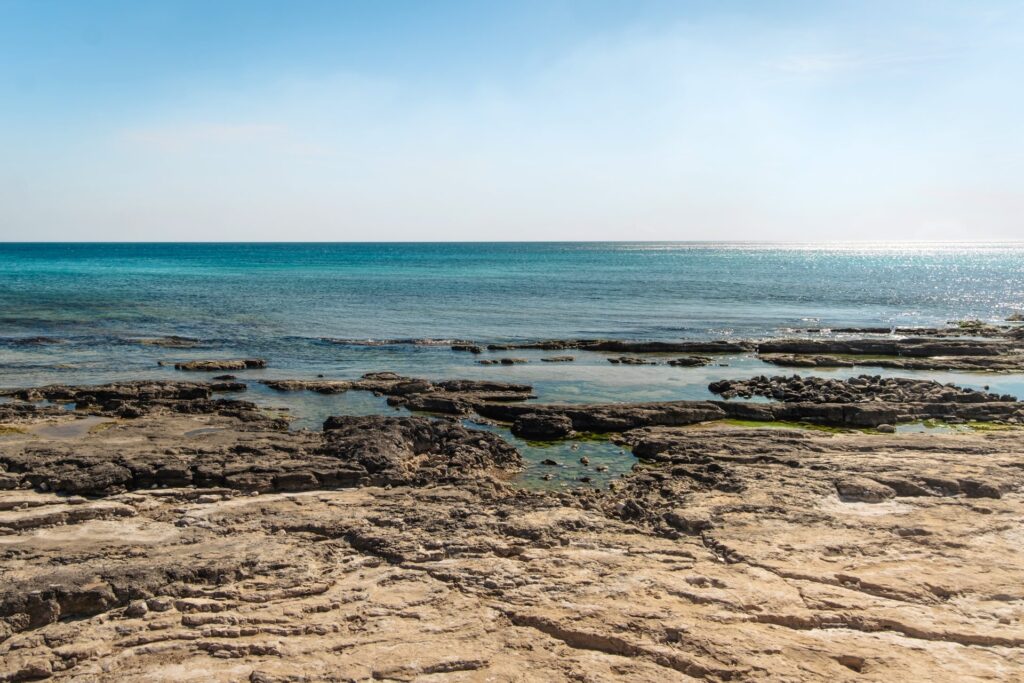
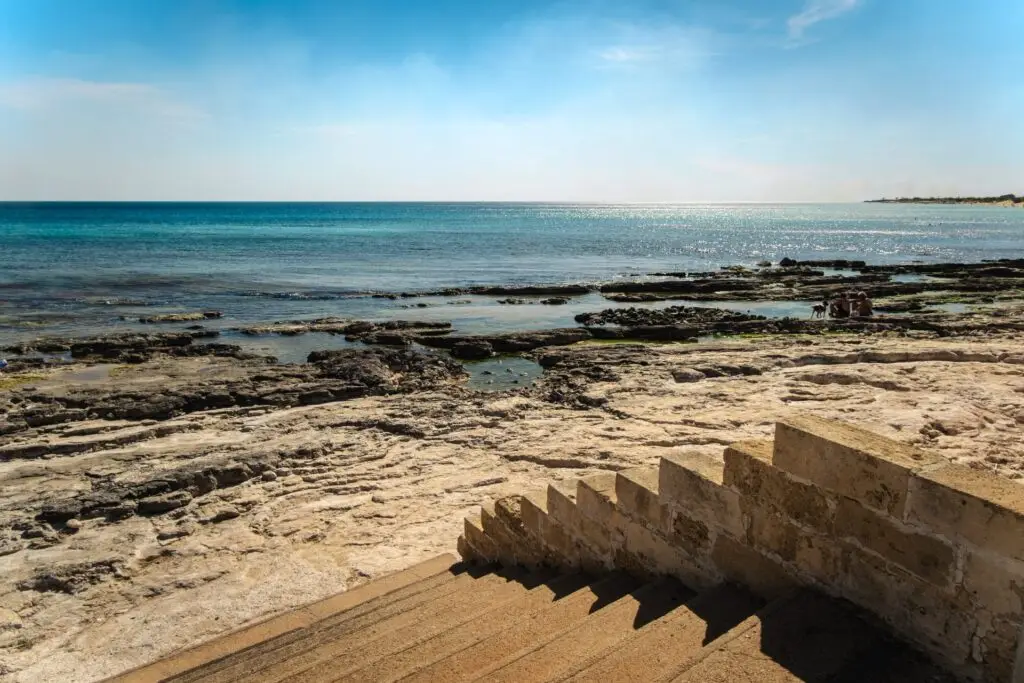
An itinerary that links the Ionian coast with the rural hinterland, characterised by its “landscape of stone”.
The route starts from the infopoint in the services area and follows the seafront north-west for about 500 metres to the “Sorgenti”, pools of spring water that are the Marina’s main attraction. These natural springs were used in the past to quench thirst and to clean linen fabrics of the impurities left by processing, and today offer an invigorating dip in their cool pools.
Take via Scalelle towards Posto Cantoro, crossing a vast expanse of unspoilt nature covering the hill as it slopes gently down to the sea, among pajare and mazes of dry-stone walls, a true “landscape of stone”. On reaching the locality of Ursuli, on a limestone plateau overlooking a vast area stretching towards the sea, you follow the road of the same name to via Biscozzo, which joins via Murge.
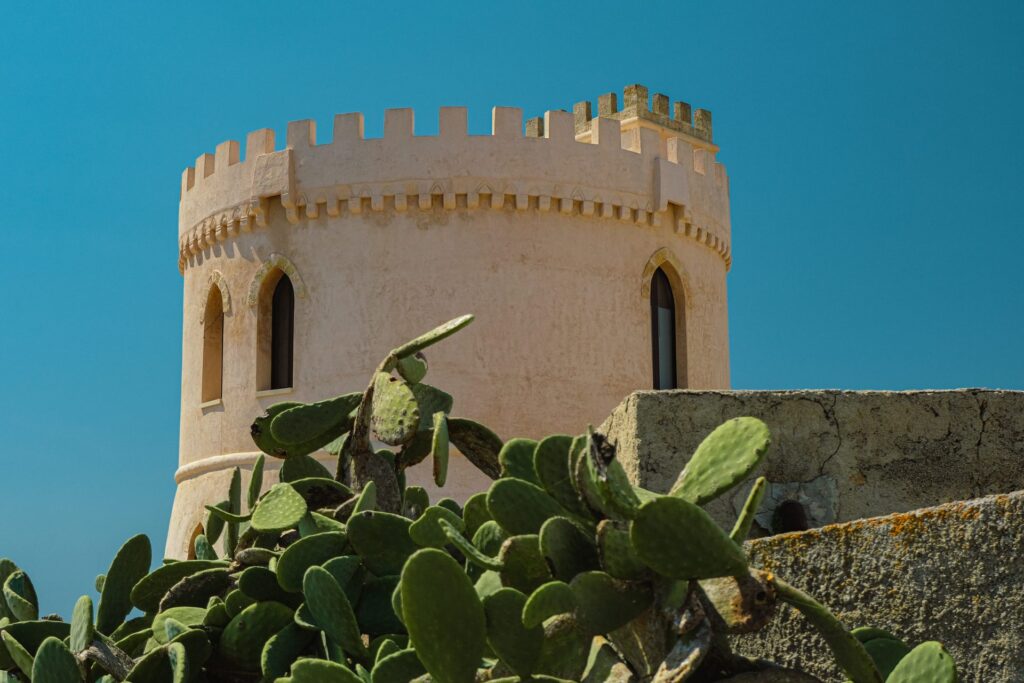
Here a country track about 900 metres long winds among remnants of ancient oak woods and surviving patches of Mediterranean scrub, before returning to via Murge and via Biscozzo, passing two distinctive modern votive shrines. After crossing the SP 190, you head along via Nepole towards a panoramic area with a striking sea view, down to the foot of a coastal tower built in the second half of the 16th century at the behest of the Spanish, to defend the coast and hinterland from Turkish raids.
Nearby there is an inviting free beach, a gem of white sand, offering the chance of a refreshing swim right beside the oldest part of the Marina. You return to the starting point along a short stretch of seafront next to the services area.
Barbarano del Capo route
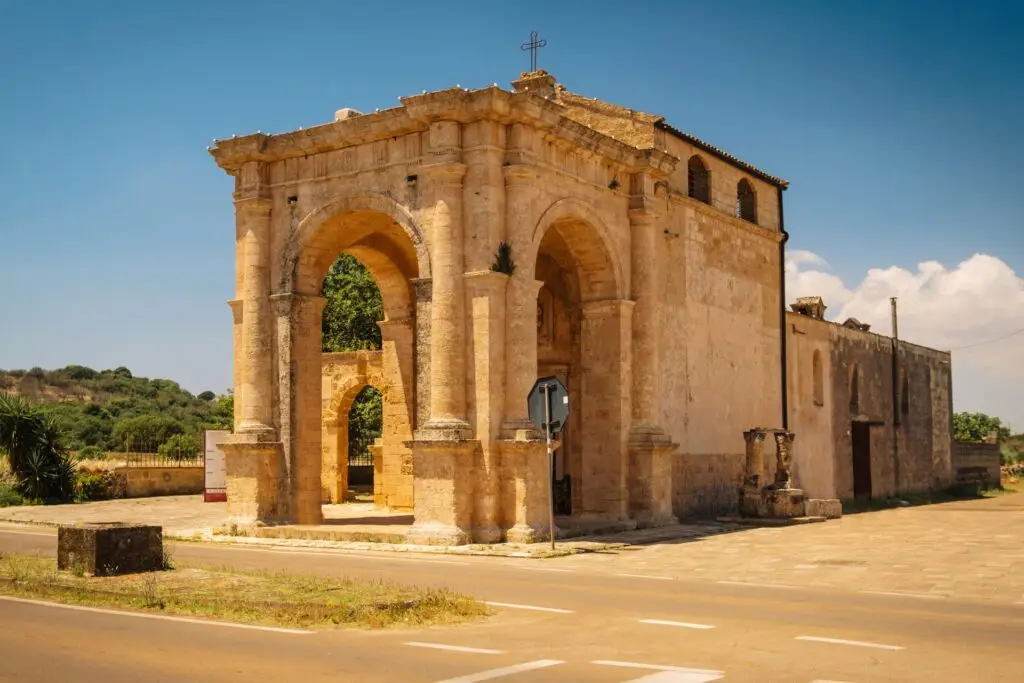
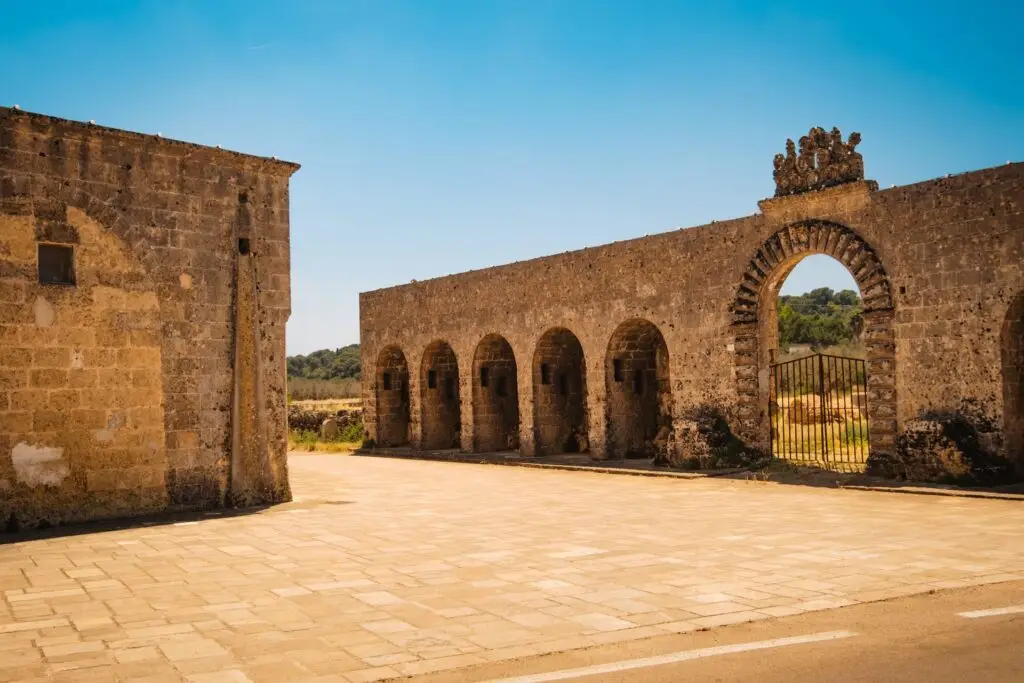
This route of about 4 km explores the hamlet of Morciano, between karst features and aristocratic architecture.
The itinerary starts from the complex of Santa Maria del Belvedere (“Leuca Piccola”) and continues along the local road Chiavarello, where you come across two “vore”, among the most significant karst sinkholes in Salento. From the “vora grande” you continue along a dirt path that crosses the railway via a low stone bridge, in a landscape marked by old tufa quarries, now partly abandoned.
On reaching the SP 190, you walk for about 200 metres to piazza San Lorenzo, then enter via Viti, where there is a former chapel dedicated to the Conception of the Blessed Virgin (or of the Madonna delle Grazie), now used as a storeroom. An inscription dated 1614 was found here, probably linked to the presence of an old olive press. At the junction with via Baracca stands the Church of the Assunta (early 17th century), which holds two canvases attributed to Antonio Donato D’Orlando.
In piazza Caduti rises the Capece tower (1505), 18 metres high, and a short distance away the parish church of San Lorenzo, dating from the mid-16th century. The route continues along via di Mezzo and via Messeri, then onto via Unità d’Italia, as far as a country track that crosses the railway and leads to via Sant’Oronzo, from where you return to Leuca Piccola, the starting point of the itinerary.
From the village to the sea route
A longer itinerary, about 13 km, linking the centre of Morciano directly to the Marina di Torre Vado.
The starting point of the itinerary is the Palazzo Strafella Infopoint. From via Roma take via Pace and follow via Castromediano towards Salve, joining the road to Posto Vecchio in the direction of the chapel of San Lasi. Past the masseria of the same name, you cross a vast expanse of unspoilt nature covering the hill as it slopes gently down to the sea, walking along ancient country tracks among oak woods and dense bushes of rockrose, mastic, myrtle and buckthorn, bordered by well-built dry-stone walls.
After skirting old dry-stone buildings (pajare), from the votive shrine on via Scalelle you follow a long downhill stretch to the seafront of Torre Vado, for a short stop at the “Sorgenti”, a site of natural interest that is the Marina’s main attraction. These natural freshwater springs were used in the past to quench thirst and to clean linen fabrics of the impurities left by processing, and today offer an invigorating dip in their cool pools.
After walking the whole seafront south-east, you pass an inviting free beach, a gem of white sand, offering the chance of a refreshing swim right beside the oldest part of the Marina. Just a few metres separate it from the coastal Tower, built in the second half of the 16th century at the behest of the Spanish, to defend the coast and hinterland from Turkish raids. You return to Morciano along via Nepole, crossing the locality of Monti Russi, a panoramic area with a striking sea view.
Vereto trail
A walk of historical and archaeological interest that follows ancient roads.
The itinerary starts in Morciano di Leuca, from the infopoint at Palazzo Strafella. This is an elegant building whose façade was completed during the 20th century. On the ground floor is the refectory, identified as such by a fresco of the Last Supper on one of its walls, and on the upper floor some rooms whose layout immediately calls to mind the friars’ cells. Another ground-floor room houses the municipal library.
Leaving the pink façade behind, you will notice circles carved into the paving stones on the ground: these are simply the marks of the grain pits, which were later converted to house underground olive presses, of which there are around twenty in the historic centre alone. A few metres further on, a fine 16th-century doorway marks the parish church, dedicated to San Giovanni l’Elemosiniere. Walking east along the street, through half-open doors you can glimpse the typical courtyard houses and tower houses, and every now and then you will spot inscriptions.
You continue to the junction with via Matteotti, from where you follow the old San Gaetano country track, recently restored, which leads to the edge of the town past an 18th-century garden. At the end of the paved road you find an ancient unpaved track, identified by some scholars as the via Sallentina, which led to a city that has now vanished: Vereto, a Messapian city that later became a Roman municipium. Once again the stone stands out sharply against the red earth, marking out the various plots of land in the form of dry-stone walls.
Having climbed the last spur of the serra Falitte and reached the highest part of the hill, you return to Morciano along via Vereto for about a kilometre, passing the Chapel of the Madonna di Costantinopoli, inside which, set against the wall, is a frescoed monolith depicting the Virgin and Child.
Discover Morciano di Leuca
Would you like to get to know Morciano di Leuca better? Discover its history, places of interest and the localities of Barbarano del Capo and Torre Vado.

